
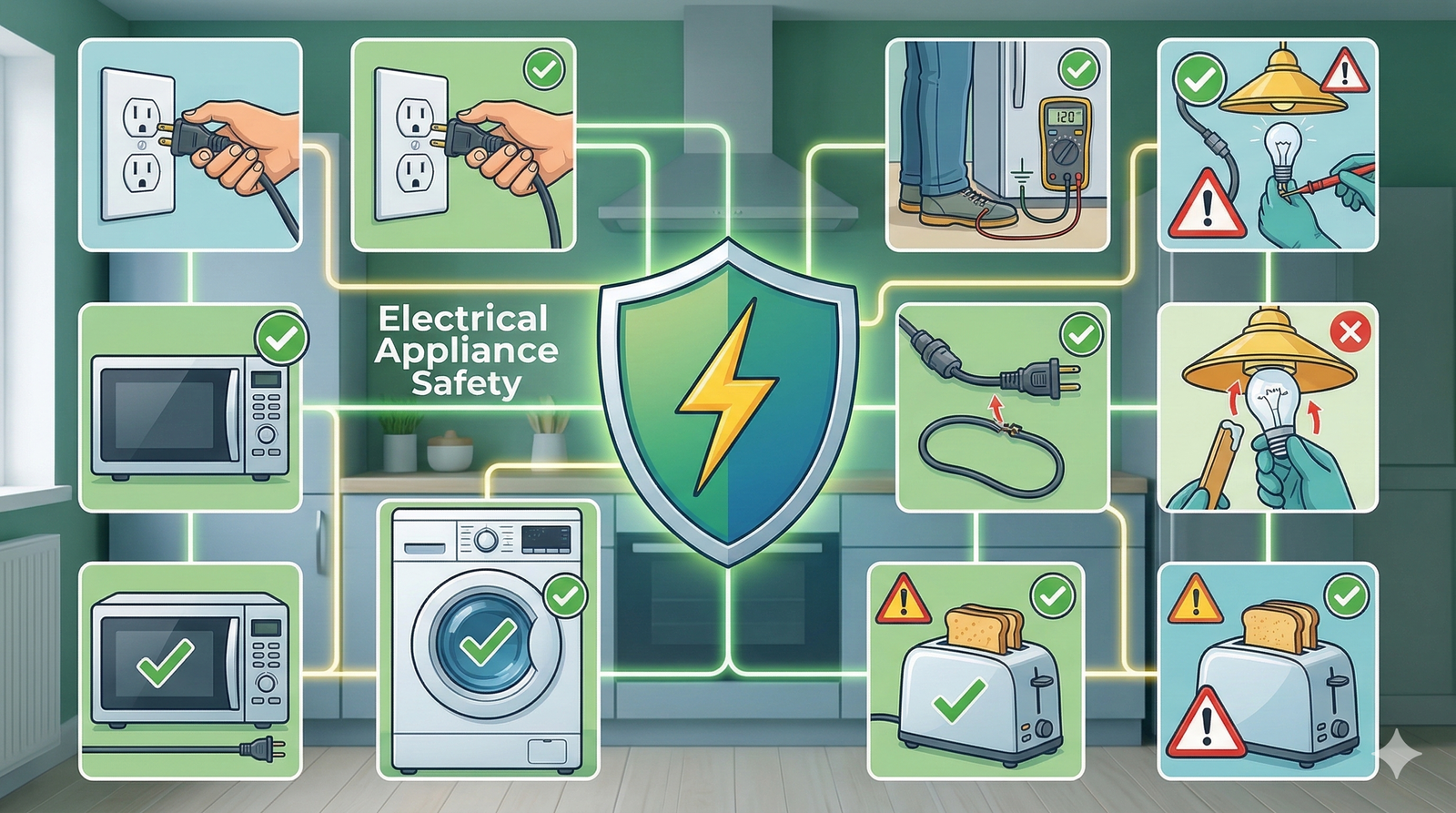
Electrical appliances make our daily lives more convenient, but they also pose potential safety risks if not used and maintained properly. Understanding electrical safety is crucial for protecting your family and home from accidents, fires, and electrical hazards.
General Electrical Safety Rules
These fundamental safety practices apply to all electrical appliances in your home:
- Read the manual: Always read and follow manufacturer instructions
- Proper grounding: Ensure appliances are properly grounded with three-prong plugs
- Avoid overloading: Don't plug too many appliances into one outlet
- Keep dry: Never use electrical appliances with wet hands or near water
- Inspect regularly: Check cords and plugs for damage before each use
- Unplug when not in use: Disconnect small appliances when finished
Power Cord and Plug Safety
Damaged cords are a leading cause of electrical fires and shocks:
- Never use damaged cords: Replace frayed, cracked, or exposed wires immediately
- Don't run under carpets: This can cause overheating and fire
- Avoid tight bends: Don't crimp or bend cords sharply
- Pull the plug, not the cord: Grasp the plug when disconnecting
- No extension cord daisy-chaining: Don't connect multiple extension cords
- Use appropriate extension cords: Match the cord rating to the appliance
Kitchen Appliance Safety
The kitchen contains many electrical appliances that require special attention:
Refrigerators and Freezers
- Keep away from heat sources and ensure proper ventilation
- Don't store flammable materials on top or near the appliance
- Clean condenser coils regularly to prevent overheating
- Never use water to clean electrical components
- Ensure the appliance is level to prevent door seal issues
Microwaves
- Never operate empty - this can damage the magnetron
- Don't use metal containers or aluminum foil
- Keep the interior clean to prevent fire hazards
- Ensure door seals are intact to prevent radiation leakage
- Allow steam to escape before removing food
Ovens and Stoves
- Keep flammable items away from heat sources
- Never leave cooking unattended
- Ensure proper ventilation to prevent gas buildup
- Clean regularly to prevent grease fires
- Turn off when not in use
Laundry Appliance Safety
Washing machines and dryers require specific safety considerations:
Washing Machines
- Ensure proper installation with secure water connections
- Don't overload - this can damage the motor and drum
- Check pockets for metal objects that could damage the drum
- Use appropriate detergent to prevent oversudsing
- Leave door open between uses to prevent mold
- Inspect hoses regularly for cracks or bulges
Dryers
- Clean lint filter after every use - lint is highly flammable
- Ensure proper ventilation to the outside
- Don't dry items with flammable substances (gasoline, oil, etc.)
- Never leave running when away from home
- Have vent ducts professionally cleaned annually
Small Appliance Safety
Irons, toasters, coffee makers, and other small appliances need attention too:
- Unplug when not in use: Especially heat-producing appliances
- Keep away from water: Maintain safe distance from sinks
- Don't leave unattended: Especially irons and toasters
- Allow to cool: Before storing or cleaning
- Store properly: In dry locations away from heat
Water and Electricity Don't Mix
Water conducts electricity and creates serious shock hazards:
- Install GFCI (Ground Fault Circuit Interrupter) outlets in wet areas
- Keep appliances away from sinks, bathtubs, and pools
- Never touch electrical appliances while wet or standing in water
- Dry hands thoroughly before using electrical devices
- If an appliance falls in water, don't reach for it - turn off power first
Child Safety
Protect children from electrical hazards:
- Use outlet covers on unused outlets
- Keep appliance cords out of reach
- Teach children about electrical safety
- Store small appliances in locked cabinets
- Never leave children unattended near operating appliances
Warning Signs of Electrical Problems
Contact a professional immediately if you notice:
- Burning smell from appliances or outlets
- Sparks when plugging in or unplugging
- Outlets or switches that are warm to touch
- Flickering lights when appliance operates
- Frequent circuit breaker trips
- Tingling sensation when touching appliances
- Discolored or scorched outlets
- Buzzing or crackling sounds
Fire Safety
Electrical appliances are a common cause of house fires:
- Install smoke detectors on every floor and test monthly
- Keep a fire extinguisher in the kitchen
- Know how to use a fire extinguisher (PASS method)
- Never use water on electrical fires
- Have an evacuation plan and practice it
- Don't overload circuits or outlets
Maintenance and Inspection
Regular maintenance prevents many safety issues:
- Schedule annual professional inspections for major appliances
- Clean appliances according to manufacturer recommendations
- Replace old appliances that show signs of wear
- Keep warranty and service records
- Use only authorized repair services
When to Call SHAHAB ELECTRICAL
Professional help is essential for:
- Any electrical malfunction or unusual behavior
- Appliances that trip circuit breakers
- Burning smells or visible damage
- Water damage to electrical appliances
- Regular maintenance and safety inspections
- Appliance installation and setup
At SHAHAB ELECTRICAL, safety is our top priority. Our certified technicians are trained to identify and resolve electrical safety issues in all types of domestic appliances. We use proper safety equipment and follow all electrical codes to ensure your home is safe. Contact us at +65 8679 7700 for professional appliance repair and safety inspections.